How to connect Burp Suite to Genymotion
Set up and connect Burp Suite to all Genymotion variants.

This tutorial will guide you on how to connect a running virtual device to ADB in Genymotion SaaS.

In this tutorial, it is assumed that you are familiar with MobSF and you are using it from a physical local machine. For detailed information about MobSF, please refer to MobSF documentation. Important This tutorial requires modification to MobSF source code; it will not work with MobSF official docker image. Prerequisite Setup gmsaas CLI Configure the path to your Android SDK Use the following command: <sdk_path> should point to the Android SDK installation directory, similar to the ANDROID_SDK_ROOT or deprecated ANDROID_HOME environment variables. Configure authentication You will need a Genymotion SaaS API token for this step. If you haven’t created one yet, you can follow the steps from our on-line documentation. Next, use the following command: Alternatively, you can store the API Token in the environment variable: GENYMOTION_API_TOKEN Verify gmsaas configuration Run the command: If the command returns “Authentication OK” and “Android SDK OK”, you are all set with gmsaas! Connect an instance to ADB Start your instance. When it is in “Running” state, copy the instance UUID (you can get it from Genymotion SaaS UI dashboard, or with the gmsaas recipes list command), then use the following command: Replace <instance_uuid> with the instance UUID. The command returns to shell once ADB is connected. If the –adb-serial-port <PORT> option is set, the instance will be connected to ADB on localhost:<PORT>. Another method is to connect any running instances to ADB by combining this command with the –quiet or -q option and xargs: You can verify with the adb devices command; adb should now be connected to “localhost:XXXXX device”. For example: Configure MobSF 1. Clone MobSF code from github Clone MobSF open-source code to your computer: 2. Modify the code Edit the Mobile-Security-Framework-MobSF/mobsf/DynamicAnalyzer/views/android/environment.py script and comment the following lines in def connect_n_mount(self): Save the script. 3. Install MobSF Important It is strongly recommended to use a Python Virtual Environment to install and use MobSF. In the Mobile-Security-Framework-MobSF folder, run: 4. Launch MobSF When done, run this command: Now, you can access MobSF by browsing to http://localhost:8000/. Log in and navigate to DYNAMIC ANALYSER, your Genymotion SaaS instance should appear as connected at localhost:XXXXX :

This tutorial describes how to install Magisk on all Genymotion products.
In this tutorial, we will cover how to create a minimalist Ubuntu 22.04 docker container with gmsaas and how to use it.

Run Applitools Visual Tests on Genymotion SaaS Virtual Devices

Scale your e2e React Native UI testing with Detox on Genymotion SaaS Android virtual devices.

Run parallel tests with Appium on Android using Genymotion SaaS.

Run your mobile automated tests on Genymotion SaaS Android Virtual Devices with CircleCI
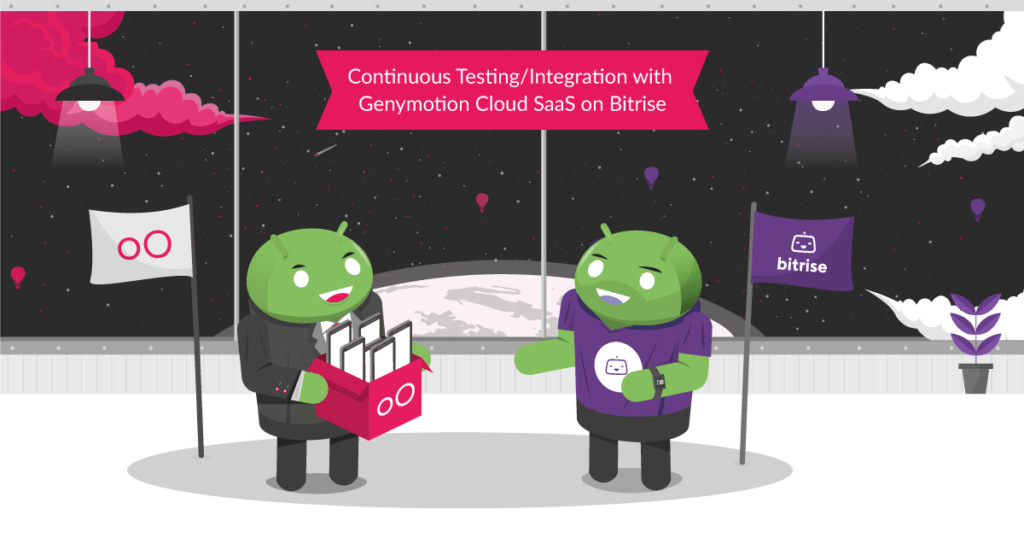
Integrate Genymotion SaaS Android Virtual Devices into your workflows with Bitrise